Are You Prepared?
If you’ve ever been on a camping trip, you know that there is much preparation to be done before you actually depart. For me personally, I spend hours making sure I know where I’m going, double checking my backpack for all the necessary gear, and then doing it all again until I’m sure I’m ready to go. A friend of mine likes to say, “There’s no such thing as bad weather, just bad preparedness.”
I agree with that statement 100%.
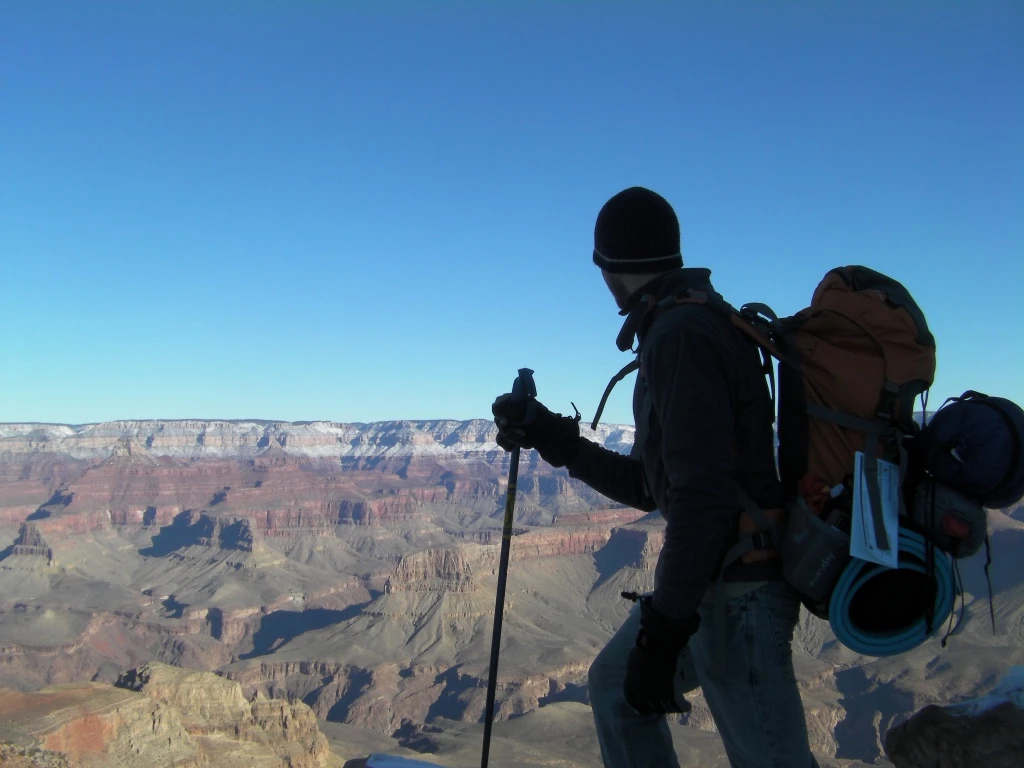
In 2009, my good friend Adam and I decided to embark on a 21 day road trip that would take us from Michigan to California and back. One of our stops on this excursion was to camp in the bottom of the Grand Canyon……on December 24th.
Now, you’re probably thinking that the Grand Canyon is in Arizona and that it was probably really warm (which is what Adam and I thought). In reality though, the Grand Canyon in December typically gets 2-3 feet of snow at the rim of the canyon and the canyon floor will, on average, be 10o F. Now camping in that cold of weather takes some thought and preparation.
No, No We Are Not
Thought and preparation are two things Adam and I failed to do.
We had a 3 season tent (meant for Spring, Summer, and Fall), did not bring the right kind of camping food, used sleeping bags that were meant only for 45o F, and used ski poles as our trekking poles. Needless to say, we weren’t prepared.
The funny thing though is that we thought we were! The night before we started our descent into the beautiful canyon, we went to a camping supply store and bought new fuel for our camping stove. We were borrowing our camping stove from a friend and the fuel tank he gave us was almost empty. As we were packing, Adam asked, “Should we even pack the old fuel?” I replied with a confident “No way! We’ll just pack the new one to save space.” Oh, how this was a mistake.
The Surprise
After our 5 hour hike down to the canyon floor and to the Bright Angel Campground, we dropped our backpacks, grabbed our summer sausage, and were ready to cook our lunch on our camping stove. We started to screw the stove onto the new fuel bottle we just bought, but something was wrong. The fuel stove wouldn’t fit onto the fuel bottle – we bought the wrong one and didn’t even test it until we got to the bottom of the Grand Canyon.
Have you ever done this in life? Thought you knew what you were doing. Thought you had all the answers. Thought you thought ahead and were prepared. But then you found out real quickly that you knew nothing, had no answers, and were well unprepared. Moments like that can easily cause anxiety, stress, and catastrophic thinking….
What’s Your Response?
…if we allow them to. The cool thing about our brains is that we can control our thoughts, which influences our emotions, behaviors, and physiological responses (what happens in our bodies). There are skills that we can do to help us change negative or irrational thoughts. If Adam and I knew these skills, we wouldn’t have said things like, “We are going to die!” and “I hope my parents can find us once we are frozen.”
What Are Those Skills?
The first and probably best thing you can do when you feel anxious or stressed is to take a deep breath. I know, I know – so many people have told you to do this before and it hasn’t helped. But have you truly tried it? Probably not. Breathe in deep through your nose into your belly – NOT YOUR CHEST – and then out slowly through your mouth. To practice this, sit up straight in a chair, place your hand on your chest, breathe in through your nose, and then slowly out your mouth. To check if you’re doing this right, make sure your hand is not rising or falling when you breathe. Again, you’re doing deep breaths, which come from the belly.
Deep breaths help do several things: Calms down your heart rate and blood pressure, helps increase logical thinking, and distributes more oxygen to the brain.
Once you do this and can think clearly, the next step is to identify irrational or negative thoughts you may be having and do the skill known as reframing. This is where you take a negative or irrational thought and look at it from a more positive or rational perspective. So a reframe of “We are going to die!” could be, “We did not check if the stove and fuel fit, but can come up with other solutions to cook our food and stay warm.” The skill of reframing takes practice and time and it works best when you can take that deep breath. You can practice reframing thoughts when someone accidently bumps into you at school or when you think someone is staring at you across the lunch room. This helps control you from getting overly emotional (angry, sad, stressed, etc) about things that never were meant to make you feel that way.
How’d the Camping Trip End?
It ended with us freezing … but alive. It got down to 0o F that night. For dinner, we were planning on making pizzas (for whatever reason, we thought that was a good idea), but we ended up dipping cold, uncooked, hotdogs in pizza sauce that had cheese mixed in it. Instead of a warm cup of cocoa at night, we drank ice cold water. But we survived. After I freaked out that our stove and fuel canister didn’t align, I calmed down, reframed our situation, and came up with plausible solutions to our problem.
It’s a great way to make it through stressful and emotional situations with a positive result…even if hotdogs dipped in pizza sauce is your solution.
Questions to Consider
Have you ever had a camping stove & fuel canister moment? When you thought you were prepared, but really weren’t?
How did you respond? Was your initial thought negative or irrational?
If you could go back and reframe that situation, what would a more positive and rational thought be?
How does your thoughts influence how you feel and ultimately, how you act?
Leave a Reply